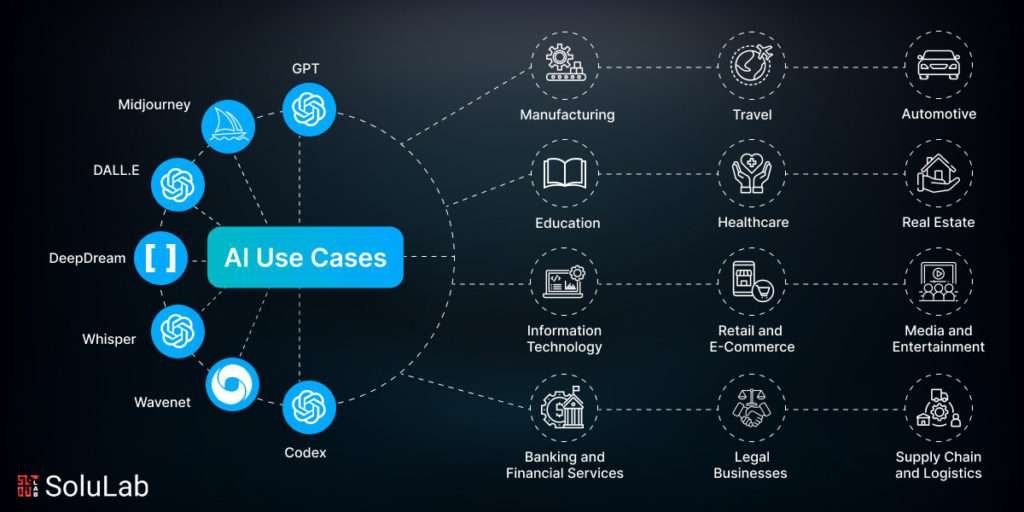
Ever felt like a project was veering off course, with requirements shifting like sand dunes and user needs getting lost in translation? You're not alone. Many development nightmares begin not with bad code, but with a fuzzy understanding of what the system is actually supposed to do and for whom. This is precisely where Applications & Use Cases step in, serving as a powerful compass to navigate the complexities of system design and ensure every feature genuinely serves its purpose.
Think of use cases as highly detailed scripts for how your users interact with your system. They illuminate the specific goals a user wants to achieve, the precise steps they'll take, and how your system will respond. In essence, they're the blueprint for a truly user-centric design, preventing costly rework and paving the way for successful outcomes.
At a Glance: Why Use Cases Matter
- Clarity on Purpose: Define exactly what a system should accomplish from the user's perspective.
- User-First Design: Keep actual user needs at the heart of every decision.
- Team Alignment: Create a shared understanding among developers, designers, and stakeholders.
- Early Problem-Solving: Identify potential issues and errors before they become expensive bugs.
- Scope Control: Clearly outline system boundaries, preventing endless additions.
- Comprehensive Documentation: Provide a detailed record for current and future development.
What Exactly Are Use Cases? A Deep Dive
At its core, a use case is a structured description of how a user (or another system) interacts with your system to achieve a specific goal. It's more than just a list of features; it's a narrative that details the sequence of actions and the system's corresponding reactions. This methodology helps teams review and analyze systems, determining, interpreting, and organizing requirements and features in a clear, actionable way.
When you break down a use case, you'll find it outlines:
- Who is using the software or website.
- What their ultimate goal is.
- The ordered steps they take to complete that task.
- How the software or website reacts to their every action.
This structured approach makes it indispensable for anyone involved in crafting robust, user-friendly digital experiences.
Two Sides of the Same Coin: Business vs. System Use Cases
Use cases aren't one-size-fits-all. They can operate at different levels of detail, depending on your immediate needs:
- Business Use Cases: These are your high-level strategic maps. They focus on the big picture, outlining interactions between a business and its users, often detailing broad business process objectives. For instance, a business use case might describe how a "Customer Places an Order" in an e-commerce system, without getting bogged down in the minutiae of database calls or specific UI elements.
- System Use Cases: These are the granular blueprints. They dive deep into every interaction between the user and the system, specifying the underlying processes and technical details. Taking the "Customer Places an Order" example, a system use case would detail every click, every form field, every validation check, and every system response from the moment the customer adds an item to their cart until the order is confirmed.
Both types are vital, serving different purposes in the development lifecycle. Business use cases guide strategic planning and stakeholder discussions, while system use cases inform technical design and development.
Why Use Cases Aren't Just Bureaucracy: The Core Benefits
Implementing use cases isn't about adding extra steps to your process; it's about adding clarity, preventing headaches, and ensuring your project stays on track. Here’s why savvy teams swear by them:
- Providing the Best Possible Outcome Scenario: By mapping out the intended design, use cases accurately show how a system should ideally function. This clarity helps everyone visualize the "happy path" and work towards it.
- Leading Problem-Solving Sessions: Use cases are fantastic catalysts for proactive brainstorming. By walking through user interactions step-by-step, teams can anticipate potential issues, misunderstandings, malfunctions, or defects, and then resolve them before development even begins. It's like finding potholes before you drive over them.
- Establishing System Goals and Targets: Crafting use cases forces you to define what the system truly needs to achieve. This helps determine complexity, estimate development costs, and set realistic timelines.
- Prioritizing Elements and Features: When you understand core user goals through use cases, it becomes much easier to distinguish essential software needs from "nice-to-haves." This allows developers to focus on what truly matters first.
- User-Centric Focus: This is perhaps the most significant benefit. Use cases put the user at the forefront, ensuring that all development efforts align with actual user needs and behaviors. This guarantees you're building a solution people will actually use and love.
- Enhanced Communication: Use cases serve as a common, unambiguous language between technical teams, business stakeholders, and even end-users. They bridge the gap between technical jargon and business objectives, fostering better understanding and collaboration across the board.
- Error Identification: By meticulously detailing user interactions, use cases help identify potential errors in user flows and system responses early in the design phase, drastically reducing debugging time later on.
- Scope Management: Use cases define clear system boundaries. By specifying what the system will and won't do, they act as a crucial tool for preventing "scope creep" – that insidious expansion of project requirements that can derail timelines and budgets.
- Improved Documentation: Each well-written use case becomes a piece of clear, detailed documentation of system requirements. This is invaluable for future maintenance, upgrades, and onboarding new team members. It’s like an instruction manual for your system’s behavior.
Whether you're building a small app or a complex enterprise system, understanding how to apply these concepts can dramatically improve your project's trajectory. You might even want to Learn more about small electric generators for your home or business, realizing that even hardware benefits from a clear understanding of its intended use cases.
Peeling Back the Layers: The Nine Essential Elements of a Use Case
To write an effective use case, you need to know its constituent parts. Think of these as the fundamental ingredients that make a use case both comprehensive and actionable:
- Use Case Number and Application: A unique identifier for easy record-keeping and referencing. It's often chronological, like "Use Case #1: Shopper Places Item into Online Cart."
- Use Case Name and Description: A concise title that captures the user's goal (e.g., "Manage Subscription") followed by a brief, more elaborate explanation of the use case's purpose.
- Actor: This is the "who." An actor is someone or something that performs a behavior and uses the system. This could be a human user (e.g., "Buyer," "Administrator") or an external system (e.g., "Credit Card Company," "Transaction Timer Clock").
- Stakeholder: Anyone with a particular interest in how the system behaves, even if they aren't direct users. They benefit from the system's successful operation, such as "Alternative Payment Platforms" or "Marketing Department."
- Primary Actor: The specific actor whose goal is fulfilled by the software, often the one initiating the use case. For a B2B sales system, this might be a "Major Distributor" placing an order.
- Preconditions: Statements that define what must be true before the use case can begin. For example, before a user can "Add to Cart," the precondition might be: "An item must be in stock and displayed on the product page."
- Triggers: The specific events that initiate a use case. These can be internal (e.g., "System detects session timeout") or external (e.g., "Customer initiates problem report," "Product launch research request received").
- Basic Flow (Main Success Scenario): This is the ideal, perfect, error-free sequence of actions between the actor and the system, leading directly to the primary actor's goal. It's the "happy path" and forms the foundation upon which alternative scenarios are built.
- Alternative Path (Alternative Flow): Variations of the main success scenario, typically showing how the system responds when errors occur, exceptions are met, or different choices are made. Examples include "Invalid password entered," "Item out of stock," "Session timed out," or "Payment failed." These paths are crucial for making your system robust.
Your Roadmap to Clarity: How to Write Effective Use Cases
Writing clear, effective use cases is a skill that improves with practice. Follow these steps to build comprehensive scenarios that genuinely guide your development process:
- Identify Actors: Start by figuring out who or what will interact with your system. List all primary users (the main goal-seekers), secondary users (those who interact occasionally or indirectly), and any external systems that need to exchange information. Don't forget non-human actors like payment gateways or data analytics tools.
- Define Goals: For each primary actor, pinpoint the specific, measurable goals they aim to achieve using your system. These goals should align directly with your overall business objectives. For example, a customer's goal might be "Purchase Product," while an administrator's goal might be "Generate Sales Report."
- Outline Steps: This is where the narrative comes alive. Describe the sequence of actions taken by the actor and the system's responses in a clear, step-by-step format. Focus on the "happy path" first – the ideal, successful interaction. Use active voice and concrete language.
- Example:
- Actor opens "Products" page.
- System displays product catalog.
- Actor searches for "smartphone."
- System displays search results.
- Actor selects "iPhone 15."
- System displays iPhone 15 product details.
- Consider Variants: Once the basic flow is solid, account for alternative scenarios. This includes exceptions, errors, or different user choices that deviate from the main success path. What happens if an item is out of stock? What if a user enters an invalid password? What if a payment fails? Documenting these ensures your system can handle real-world complexities gracefully.
- Validate with Stakeholders: The final, crucial step. Review your drafted use cases with all relevant stakeholders – product owners, developers, QA testers, and even potential end-users. This validation process confirms accuracy, completeness, and ensures everyone shares a common understanding of how the system should behave. It’s an opportunity to catch misunderstandings early.
Real-World Scenarios: Use Cases in Action
Let's look at how use cases play out in practical application, guiding development and troubleshooting in various industries.
1. Airline's Online Booking System
Challenge: An airline needed to refresh its online booking system to integrate complex fare options and ancillary services, like extra baggage or meal choices.
Use Cases in Action: Engineers designed a new booking page. Use cases were crucial for mapping out user journeys: browsing available flights, selecting specific flights, adding extras, and navigating various payment methods (credit card, loyalty miles). A key discovery during testing was an issue where add-ons could only be selected after a previously established account was identified, creating friction for new users. The use case highlighted this disconnect, allowing for a redesign that permitted add-on selection during initial booking for all users.
2. Food Delivery Service Mobile App
Challenge: Expanding a popular food delivery service to include more food and drink establishments, even those with limited or frequently changing menus.
Use Cases in Action: Developers created use cases for scenarios like:
- A customer searching for an item that is currently unavailable from a specific restaurant.
- A low-dollar-amount order prompting a minimum purchase message.
- The "Order again" feature, including cases where previous items are now out of stock.
These use cases helped ensure the app gracefully handled inventory fluctuations and guided users toward successful orders, even with menu limitations.
3. Ticket Sales Platform
Challenge: Streamlining a ticket sales platform's functionality to be more intuitive due to customer feedback about a confusing purchase process.
Use Cases in Action: Scenarios were meticulously mapped, including:
- A user selecting seats that become unavailable just before purchase.
- The system handling an odd number of selected seats, preventing "orphan" single seats.
- Alerting users about partially obstructed views for certain seating options.
- Guidance for selecting and confirming accessible seating requirements.
These use cases allowed the team to refine the seating selection interface, making it more user-friendly and transparent.
4. User Registration and Onboarding
Actor: New User
Goal: Create an account and complete initial setup.
Basic Flow: Navigate to registration page -> Enter personal information -> Verify email -> Complete onboarding wizard.
Variants: Incorrect details entered (system prompts correction), email verification link expires (system allows resend), user skips optional onboarding steps.
5. Subscription Management
Actor: Existing User
Goal: Upgrade or downgrade subscription plans.
Basic Flow: Access billing section -> Select desired subscription tier -> Review pricing and features -> Confirm changes.
Variants: Payment method failure (system prompts for new payment), selected tier not available (system explains why), user cancels changes before confirmation.
6. Feature Utilization Tracking
Actor: Admin / Product Owner
Goal: Analyze feature usage patterns.
Basic Flow: Log into analytics dashboard -> Select desired timeframe -> Review usage metrics -> Export data.
Variants: Data export failure (system notifies admin), selected timeframe has no data (system displays message), restricted access prevents certain metrics.
7. Incident Reporting
Actor: End-User
Goal: Report a technical issue within the application.
Basic Flow: Navigate to support section -> Fill out incident report form -> Submit report -> Track ticket status.
Variants: Incomplete information submitted (system prompts for missing details), attachment upload fails (system notifies user), duplicate report detected (system links to existing ticket).
8. Team Collaboration Setup
Actor: Team Leader / Administrator
Goal: Add new team members and assign roles to facilitate collaboration.
Basic Flow: Access team management panel -> Invite members via email -> Assign specific roles (e.g., Editor, Viewer) -> Confirm team setup.
Variants: Invitation email not received (system allows resend), attempted role assignment conflict (system warns admin), maximum team member limit reached (system notifies admin).
These examples highlight how use cases translate abstract requirements into concrete, understandable scenarios, guiding both development and quality assurance.
Beyond the Code: Where Else Use Cases Shine
While synonymous with software development, the principles of use cases extend far beyond coding. Their strength lies in clearly defining interactions and goals, making them invaluable across various disciplines:
- Agile Development: Use cases complement user stories by providing deeper detail for complex features, ensuring comprehensive understanding during sprint planning.
- Project Management: They help define project scope, identify dependencies, and estimate resources more accurately by clarifying deliverables from a user interaction perspective.
- User-Centered Design (UCD): Use cases are a fundamental tool in UCD, ensuring that design decisions are always driven by how users will interact with the system to achieve their objectives.
- Systems Engineering: In large-scale system integration, use cases help define the interfaces and interactions between different system components and external entities.
- Quality Assurance (QA): Use cases form the basis for comprehensive test plans, providing clear scenarios for QA teams to validate system functionality and identify bugs.
- Education and Training: They can be used to describe business processes or system functionalities to new employees, acting as a practical guide to system operation.
The core idea—defining interactions to achieve goals—is universally applicable.
Clearing the Air: Use Cases vs. Their Cousins
The world of system design is rich with terminology, and it's easy to confuse use cases with related concepts. Let's clarify some common distinctions.
Use Case vs. User Story
This is one of the most frequent points of confusion, especially in Agile environments.
- Use Case: Provides a detailed, structured description of how a user interacts with a system to accomplish a specific task, outlining steps, conditions, and system responses. It's comprehensive, often spanning multiple interactions.
- Example: "As a customer, I want to purchase a product online." (This would then be expanded into detailed steps, preconditions, and alternative flows).
- User Story: A brief, high-level description of a feature from the user’s perspective, typically following the format: "As a [type of user], I want [some goal] so that [some reason]." They serve as conversation starters and reminders of what to build.
- Example: "As a customer, I want to filter products by price, so I can easily find items within my budget."
Think of it this way: a user story is a quick note reminding you what to build, while a use case is the detailed script explaining how that "what" will actually function for the user, step-by-step. User stories are often refined into use cases as a project progresses.
Use Case vs. Workflow
While both describe sequences of actions, their focus differs significantly.
- Use Case: Concentrates on achieving a specific goal through a series of interactions between a single actor and the system. It's actor-centric and goal-oriented within the boundaries of a defined system.
- Example: "Customer places an order," detailing the steps within the online store until the order is confirmed.
- Workflow: Represents a broader series of steps or processes, often spanning multiple systems, departments, or actors, to complete a larger business operation. It typically focuses on the sequence of tasks, decisions, and handoffs.
- Example: An "Order Fulfillment Workflow" might start with a customer placing an order (a use case), then involve the sales department confirming it, inventory checking stock, warehousing picking and packing, and finally shipping and delivery. It's a holistic view of a process.
A single workflow might encompass several use cases, each representing a specific interaction within that larger process.
Equipping Your Toolkit: Tools and Formats for Use Cases
You don't need fancy software to start writing use cases; a simple document can suffice. However, various tools and formats can enhance clarity and collaboration:
- Visual Modeling Tools: Tools like UML (Unified Modeling Language) diagrams, particularly use case diagrams, offer a visual representation of actors and their interactions with the system. Specialized software like Lucidchart or Enterprise Architect can help create these.
- Documentation Tools: Standard word processors such as Microsoft Word or Google Docs are perfectly adequate for writing out the detailed text descriptions of use cases using a structured template.
- Project Management Software: Platforms like Jira can integrate use case elements into tickets or epics, linking requirements directly to development tasks and tracking progress.
- Standard Formats: The Cockburn format (named after Alistair Cockburn) is a popular, well-defined template that ensures all essential elements of a use case are covered, promoting consistency across projects. Many teams adapt this structure to fit their specific needs.
The key is to choose a method that supports clear communication and allows your team to easily understand and work with the use cases.
Your Next Steps: Building Better Systems, One Use Case at a Time
Understanding and applying use cases isn't just about ticking a box; it's about fundamentally changing how you approach system design. By meticulously detailing how users interact with your system to achieve their goals, you move beyond abstract ideas and into concrete, actionable plans.
You'll find yourself building systems that are not only robust and functional but also intuitively designed for the people who will actually use them. This clarity saves time, reduces errors, and ultimately leads to more successful, user-loved products. So, take the principles discussed here, choose a format that suits your team, and start sketching out those interactions. Your future self – and your users – will thank you.