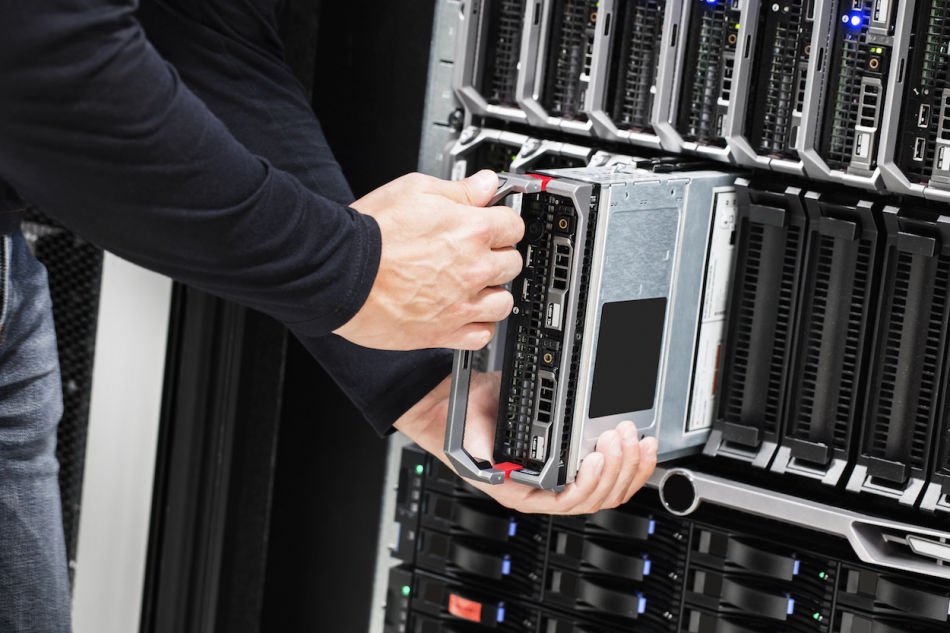
In the complex world of modern computing, your data is your most valuable asset, and keeping it safe, accessible, and performing optimally hinges on three pillars: Maintenance, Storage & Troubleshooting. Ignore these, and you're not just risking downtime; you're inviting data loss, performance bottlenecks, and a significant hit to your bottom line. But master them, and you unlock systems that run like well-oiled machines, always ready for whatever comes next.
This isn't just about fixing things when they break; it's about building resilience from the ground up, understanding your infrastructure intimately, and having a clear roadmap for both preventing and resolving issues.
At a Glance: Key Takeaways for Robust Storage Management
- Proactive vs. Reactive: Embrace a blend of Preventive Maintenance (PM) to avoid failures and Corrective Maintenance (CM) for swift recovery.
- The 7 Pillars of Storage Health: Regular backups, OS/application updates, disk cleanup, hardware inspections, antivirus, system monitoring, and a solid disaster recovery plan are non-negotiable.
- Firmware is Your Friend: Keep all storage-related firmware (drives, HBAs, network adapters) up-to-date to prevent elusive bugs and performance issues.
- Validate Everything: Before and after major changes, especially in clustered environments, run comprehensive validation checks.
- Understand Your Specifics: For advanced systems like Storage Spaces Direct (S2D), be familiar with common error states and their specific PowerShell-driven resolutions.
- Monitor Beyond the Obvious: Track not just disk space, but also IOPS, latency, and network throughput to catch performance degradation early.
- Disaster Preparedness: A well-tested disaster recovery plan (DRP) is your ultimate safety net, ensuring business continuity even after catastrophic failures.
Building a Foundation: Proactive Strategies for Uninterrupted System Performance
Think of your storage infrastructure like a high-performance vehicle. You wouldn't wait for a breakdown to change the oil or check the tires, would you? The same logic applies to your digital assets. Proactive, consistent maintenance is the bedrock of system stability and data security, minimizing disruptions before they ever have a chance to occur.
We categorize maintenance into two primary types: Preventive Maintenance (PM) and Corrective Maintenance (CM).
Preventive Maintenance (PM): The Art of Anticipation
PM encompasses all the scheduled, routine activities designed to prevent equipment failure. It's about being proactive, often leveraging historical data and even AI to predict potential faults, forecast capacity needs, and detect anomalies. The goal is to catch small issues before they snowball into critical problems.
Corrective Maintenance (CM): The Swift Response
CM, on the other hand, is reactive. These are the steps you take after a failure has occurred. While PM aims to reduce the need for CM, a robust CM strategy is essential for efficient troubleshooting, rapid repair, or timely replacement of faulty components. Automated health monitoring and well-documented procedures are crucial here.
Let's dive into the core components of a stellar preventive maintenance strategy for your storage.
The 7 Essential Steps for Optimal Storage Maintenance
Maintaining your storage devices isn't a "set it and forget it" task. It's an ongoing commitment that pays dividends in data integrity, system stability, and peace of mind. Here's a deeper look at the fundamental steps:
1. Regular Data Backups: Your Ultimate Safety Net
Data loss is not a matter of if, but when. Regular, verified backups are the single most critical defense against data loss due to hardware failure, human error, cyberattacks, or natural disasters. The frequency of your backups—daily, weekly, or monthly—should align with your data's criticality and your acceptable recovery point objective (RPO).
Beyond frequency, consider the "3-2-1 rule": at least 3 copies of your data, stored on 2 different media types, with 1 copy offsite. Automate your backup processes and routinely test your restore procedures to ensure data integrity and recoverability. Tools like Vinchin Backup & Recovery offer comprehensive, agentless solutions for virtualized environments, ensuring your VMs, databases, and file servers are protected with features like instant recovery and cloud archiving.
2. Operating System and Application Updates: Staying Ahead of Vulnerabilities
Software isn't static; it evolves. Vendors constantly release patches and updates that address security vulnerabilities, fix bugs, and introduce performance enhancements. Timely installation of these updates, especially for your operating system, storage management software, and any applications interacting directly with your storage, is vital.
Always review release notes before applying updates, and test them in a staging environment if possible. Falling behind on updates can leave your system exposed to known exploits or introduce unexpected instabilities that impact storage performance and reliability.
3. Regular Disk Space Cleanup: The Decluttering Imperative
An overloaded storage system is a slow, unstable storage system. Periodically auditing and cleaning up disk space prevents performance degradation, reduces the risk of system crashes due to insufficient space, and prolongs the life of your drives by reducing unnecessary write cycles.
Identify and remove temporary files, old logs, duplicate data, and applications or datasets that are no longer needed. Many operating systems and third-party tools offer built-in utilities for this. For archives, consider moving less-frequently accessed data to colder, more cost-effective storage tiers.
4. Periodic Hardware Inspections: The Physical Check-up
While much of storage management happens digitally, the physical hardware remains critical. Regular visual and diagnostic inspections can identify potential problems early. This includes checking for proper ventilation, ensuring cables are securely connected, listening for unusual noises from hard drives, and monitoring temperature levels.
Assess the health of individual hard drives, SSDs, memory modules, and CPUs. Many hardware vendors provide diagnostic tools that can report on drive health (e.g., SMART data for HDDs/SSDs). Replace components showing signs of wear or impending failure before they lead to catastrophic data loss. Ensuring a stable power supply is paramount; just as you might consider your small electric generator guide for home backup, robust UPS solutions are non-negotiable for critical storage.
5. Installing and Updating Antivirus Software: Your Digital Shield
Malware and viruses aren't just a threat to individual workstations; they can cripple entire storage systems, leading to data corruption, unauthorized access, and system crashes. A robust antivirus solution, regularly updated and actively scanning, is fundamental.
Ensure your antivirus software is configured to scan storage volumes without causing performance bottlenecks during peak hours. Implement real-time protection to detect and neutralize threats as they emerge, and schedule full system scans during off-peak periods.
6. Monitoring and Recording System Status: The Early Warning System
You can't fix what you don't know is broken. Continuous monitoring of key system indicators is paramount for identifying and resolving issues promptly. Track metrics like CPU usage, memory utilization, disk I/O performance (IOPS, latency, throughput), network utilization, and temperature.
Analyze system logs and event viewers regularly for error messages, warnings, or unusual patterns that might indicate an underlying problem. Establish alerting thresholds so you're notified immediately when critical metrics exceed normal operating parameters. This proactive vigilance allows you to intervene before minor glitches escalate into major outages.
7. Establishing a Disaster Recovery Plan (DRP): Planning for the Unthinkable
No matter how robust your preventive measures, failures can still occur. A comprehensive disaster recovery plan ensures business continuity and data availability in the face of catastrophic events. Your DRP should outline precise steps for data restoration, recovery equipment procurement, and activation of redundant systems.
Crucially, a DRP isn't just a document; it's a living strategy that needs regular testing and refinement. Verify that your backups are restorable, your recovery objectives (RPO/RTO) are achievable, and all personnel involved understand their roles and responsibilities during a disaster scenario.
When Things Go Wrong: Advanced Troubleshooting for Server Storage
Even with the best preventive maintenance, storage systems, especially complex ones like Storage Spaces Direct (S2D), can encounter issues. Knowing how to diagnose and resolve these problems efficiently is a critical skill. This section focuses on general troubleshooting principles and specific solutions for common S2D challenges.
General Troubleshooting Steps: Your Diagnostic Playbook
Before diving into specific error codes, follow these fundamental steps for any storage-related issue:
- Certification Check: Always confirm that your storage hardware (SSDs, HDDs, HBAs) is officially certified for your Windows Server version (e.g., 2016/2019) using the Windows Server Catalog and vendor support documentation. Uncertified hardware is a common source of elusive problems.
- Physical Inspection: Visually inspect your storage for any obvious hardware faults. Use management software to identify drives reporting errors. If issues are found, work with your hardware vendor for replacement or repair.
- Firmware & Software Updates: Ensure all storage and drive firmware is at the latest recommended version. Crucially, install the latest Windows Updates on all nodes in your cluster. Many storage issues are resolved through cumulative updates.
- Network Health: Update network adapter drivers and firmware. Storage communication often relies heavily on the network, especially in distributed systems like S2D. Network issues can manifest as storage problems.
- Cluster Validation: Run a full cluster validation report. Pay close attention to the Storage Spaces Direct section, ensuring cache drives are reported correctly and no errors are present. This report provides a comprehensive health check.
Specific Issues and Solutions for Storage Spaces Direct (S2D)
S2D is a powerful software-defined storage solution, but its complexity means specific issues can arise. Here are common scenarios and their resolutions:
1. Virtual Disk Resources in "No Redundancy" State
Issue: After an unexpected node restart (e.g., power failure), virtual disks might fail to come online, displaying "Not enough redundancy information" or logging "Underlying virtual disk is in 'no redundancy' state." This typically happens if a disk failed or data became inaccessible during the outage.
Resolution: This situation requires an override to bring the volume online for recovery.
- Remove the affected virtual disks from the Cluster Shared Volume (CSV), moving them to the "Available Storage" group.
- On the node that owns the "Available Storage" group, for each affected physical disk resource, run:
powershell
Set-ClusterResource "Physical Disk" -Private "DiskRecoveryAction=1"
Start-ClusterResource "Physical Disk"
- Explanation:
DiskRecoveryAction=1is a special override allowing a Space volume to attach in read-write mode without full redundancy checks, primarily for diagnosis or data access in dire situations. It was introduced in a specific KB update (KB 4077525, Feb 2018).
- Monitor the repair process using
Get-StorageJob. VerifyGet-VirtualDiskshowsHealthStatusasHealthyonce complete. - After successful repair, revert the
DiskRecoveryActionparameter, taking the disks offline and then online for the change to take effect:
powershell
Set-ClusterResource "Physical Disk" -Private "DiskRecoveryAction=0"
Stop-ClusterResource "Physical Disk"
Start-ClusterResource "Physical Disk" - Finally, add the virtual disks back to the CSV.
2. Virtual Disk OperationalStatus "Detached" in a Cluster
Issue: You find Get-VirtualDisk reports OperationalStatus as Detached, even when Get-PhysicalDisk shows a HealthStatus of Healthy. Event IDs like 311, 134, or 5 might indicate a data integrity scan is needed or ReFS failed to mount. This usually points to a full Dirty Region Tracking (DRT) log, which ReFS uses for metadata updates and consistency.
Resolution: This requires a self-healing process triggered by chkdsk and a data integrity scan.
- Remove the affected virtual disks from CSV.
- On every physical disk resource that is not coming online, run:
powershell
Start-ClusterResource "Physical Disk" -Private "DiskRunChkdsk=7"
- Explanation:
DiskRunChkdsk=7attaches the Space volume in read-only mode, which implicitly triggers the self-healing mechanism.
- Initiate the "Data Integrity Scan for Crash Recovery" scheduled task on all nodes where the detached volume is online. This task doesn't show a progress bar but will indicate if it's running or completed. Be aware it can take hours and will reset if canceled or the node restarts. This scan synchronizes and clears the full DRT log.
- Monitor for automatic repair using
Get-StorageJoband verifyGet-VirtualDiskshowsHealthStatusasHealthy. - After the scan/repair, revert the
DiskRunChkdskparameter, taking disks offline then online:
powershell
Set-ClusterResource "Physical Disk" -Private "DiskRunChkdsk=0"
Stop-ClusterResource "Physical Disk"
Start-ClusterResource "Physical Disk" - Add virtual disks back to CSV.
3. Event 5120 with STATUS_IO_TIMEOUT (Windows Server 2016)
Issue: On Windows Server 2016, specifically with cumulative updates between May and October 2018, nodes might log Event 5120 (CSV paused due to STATUS_IO_TIMEOUT or STATUS_CONNECTION_DISCONNECTED) after a restart. This could lead to live dump generation, performance pauses, and Event 1135 (node removed from cluster). This was a known bug where an update introducing SMB Resilient Handles inadvertently increased timeouts during node restarts, causing CSV to react prematurely.
Resolution:
- Primary Fix: Install the October 18, 2018, cumulative update for Windows Server 2016 or a later version. This update aligned CSV and SMB timeouts, resolving the underlying conflict.
- Workaround (Disabling Live Dumps – if immediate fix isn't possible):
- Safe Shutdown for Updates: Implement an 8-step process involving draining the node, putting disks in storage maintenance mode (
Set-StorageMaintenanceMode), restarting, then reversing the maintenance mode and resuming the node. This ensures a clean shutdown. - Disable All Dumps System-wide: (Use with caution as it affects all crash dumps). Create the registry key
HKLM\System\CurrentControlSet\Control\CrashControl\ForceDumpsDisabledand add aREG_DWORDnamedGuardedHostwith a value of0x10000000. Requires a restart. - Disable Cluster Generation of Live Dumps: (More targeted). Run
Get-ClusterNode | Set-ClusterParameter -Name "DisableLiveDump" -Value 1. This takes immediate effect without a restart.
4. Slow IO Performance
Issue: Your S2D cluster is experiencing uncharacteristically slow input/output operations.
Resolution: Cache configuration is often key to S2D performance.
- Check Cluster Log: Generate a cluster log and search for
[=== SBL Disks ===]. - If you see
CacheDiskStateInitializedAndBoundwith a GUID, your cache is correctly enabled. - If you see
CacheDiskStateNonHybridorCacheDiskStateIneligibleDataPartition, your cache might not be enabled or configured correctly. - Check
Get-PhysicalDisk.xml: ImportGet-PhysicalDisk.XMLfrom your S2D diagnostic info. Look for theUsageproperty for your cache drives. It should beAuto-Select, notJournal. If it'sJournal, the drives are being used for journaling rather than caching.
5. Destroying an Existing Cluster to Reuse Disks
Issue: You need to decommission an S2D cluster and repurpose its physical disks.
Resolution: After disabling S2D, use the "Clean drives" cleanup process to prepare the disks for reuse. Be aware that Get-PhysicalDisk may initially report "phantom" duplicate disks; these will typically resolve themselves after the cleanup and subsequent re-scan.
6. "Unsupported Media Type" Error with Enable-ClusterS2D
Issue: You encounter an "Unsupported Media Type" error when trying to run Enable-ClusterS2D.
Resolution: This error often indicates that your HBA (Host Bus Adapter) adapter is configured in RAID mode instead of HBA (pass-through) mode. S2D requires direct access to the physical disks, so ensure your HBA is set to HBA or IT (Initiator Target) mode.
7. Enable-ClusterStorageSpacesDirect Hangs at 'Waiting until SBL disks are surfaced' or 27%
Issue: The Enable-ClusterStorageSpacesDirect command seems to freeze, often due to cluster validation reporting incompatible hardware, specifically a SCSI Port Association error related to enclosure devices not being found. This was a known issue, particularly with HPE SAS expander cards creating duplicate IDs.
Resolution: This specific issue was resolved in a subsequent Windows Server update. Ensure your server is running the latest cumulative updates.
8. Intel SSD DC P4600 Series Has a Nonunique NGUID
Issue: Multiple Intel SSD DC P4600 series devices report the same 16-byte NGUID (Namespace Globally Unique Identifier), which can cause conflicts in S2D.
Resolution: Update the Intel drive firmware to the latest version. Firmware version QDV101B1 (released May 2018) specifically addresses and resolves this issue. Always check with your OEM for the latest recommended firmware.
9. Physical Disk HealthStatus "Healthy" but OperationalStatus "Removing from Pool, OK"
Issue: A physical disk shows HealthStatus as Healthy but OperationalStatus as "Removing from Pool, OK." This indicates that a Remove-PhysicalDisk operation was initiated and the "removing" intent is being maintained for recovery purposes.
Resolution:
- The simplest approach is to remove and then re-add the physical disk from the storage pool. This often clears the lingering intent.
- Alternatively, you can use the
Clear-PhysicalDiskHealthData.ps1script (often available from Microsoft support as a.txtfile, save it as.ps1). Run this script with the-SerialNumberor-UniqueIdof the affected disk to clear the intent and force theOperationalStatusback toHealthy.
10. Slow File Copy Performance
Issue: You're experiencing unusually slow file copy speeds, especially when moving large VHDs to virtual disks in S2D.
Recommendation: For large VHD copies to S2D virtual disks, avoid using File Explorer, Robocopy, or Xcopy. These tools often bypass the S2D stack's optimizations. Instead, consider using specialized tools for performance testing and benchmarking, such as VMFleet and Diskspd, which are designed to interact efficiently with S2D and accurately measure its capabilities.
11. Expected Events During Node Reboot (Safe to Ignore)
During a standard node reboot, you might observe certain event log entries that, while appearing as errors, are actually normal and safe to ignore in an S2D context:
- Event ID 205, 203: "Windows lost communication with physical disk..." – This is common as disks detach and re-attach during a node shutdown/startup.
- (Azure VMs only) Event ID 32: "The driver detected that the device ... has its write cache enabled. Data corruption might occur." – For Azure VMs, this is a standard message and typically not an actual issue with S2D.
12. Slow Performance / "Lost Communication" / "IO Error" / "Detached" / "No Redundancy" for Intel P3x00 NVMe Devices
Issue: If you're using Intel P3x00 family NVMe devices in your S2D deployment and experiencing any of these severe issues, particularly with firmware versions older than "Maintenance Release 8."
Resolution: This suite of problems points to a known firmware defect. Apply the latest available firmware, ensuring it's at least "Maintenance Release 8" or newer. Contact your OEM or Intel directly for the most current and specific firmware version information for your devices.
Mastering Storage: Beyond the Fixes
Troubleshooting specific issues is crucial, but true mastery of storage performance comes from integrating continuous monitoring and best practices into your daily operations.
Continuous Storage Health Monitoring
Don't just wait for an alert; actively monitor your storage health. Utilize:
- Manufacturer Tools: Most RAID controllers, SANs, and NAS devices come with proprietary management software that offers deep insights into drive health, temperatures, and array status.
- Third-Party Software: Comprehensive monitoring solutions can track IOPS (Input/Output Operations Per Second), latency, network throughput, and capacity utilization across your entire storage fabric.
- Performance Baselines: Establish normal operating baselines for key metrics. This makes it easier to spot deviations that indicate impending issues or performance bottlenecks.
The Power of Deduplication
Deduplication is a vital technique, especially in backup and archive systems. It's the process of eliminating redundant copies of data, significantly reducing the amount of physical storage required. This not only saves costs but can also improve backup and restore times by minimizing the data that needs to be transferred. Understand if your storage solution or backup software supports inline or post-process deduplication and configure it appropriately.
Investing in the Right Tools
From sophisticated backup and recovery solutions like Vinchin Backup & Recovery to performance benchmarking utilities like Diskspd, having the right tools in your arsenal empowers you to maintain, optimize, and troubleshoot your storage environment effectively. These tools automate tasks, provide critical insights, and accelerate recovery processes.
Your Path Forward: Sustained System Health
Managing storage, especially in high-demand environments, is an ongoing journey, not a destination. By embracing both the proactive discipline of preventive maintenance and the skilled response of effective troubleshooting, you fortify your systems against the inevitable challenges.
Start by auditing your current storage environment. Are your backups robust and tested? Is all firmware up-to-date? Do you have clear, documented procedures for both routine maintenance and unexpected failures? Identify your weakest links and prioritize improvements. Implement a continuous monitoring strategy that gives you early warnings, allowing you to move from reactive crisis management to proactive system stewardship. Your data, your users, and your peace of mind will thank you for it.